From contemporary installations in historic churches to saturated abstract paintings, experimental dance and independent short films, Ghent Art Week offers a snapshot of a city where art is not confined to museums. But when the programme is so diverse, what separates work that merely catches the eye from work that genuinely holds our attention?
Ghent is a city where history is difficult to overlook. Medieval streets, monumental churches and former industrial buildings provide the setting for a contemporary cultural scene that extends well beyond its historic centre. Alongside established museums, galleries, independent art spaces and artist-led initiatives bring experimental work into the city’s everyday life.
Held from 28 September to 4 October 2026, Ghent Art Week invited visitors to explore this scene through exhibitions, performances and film screenings distributed across the city. Organised by Kris De Meester, founder of Velvet Room and the main producer of Ghent Art Week and Film Week, the event brought together more than 30 artists, over 10 galleries and more than 30 screenings, with free entry to participating events. Rather than confining contemporary art to a single exhibition space, the programme unfolded across the city, inviting visitors to move between venues, encounter different artistic disciplines and experience Ghent’s art scene as a network of interconnected spaces.
Over several days, I visited exhibitions, attended a dance performance and spent two evenings watching short films. With a background in architecture, I found myself looking beyond the artworks themselves to consider how their materials, placement and surroundings shaped the experience. Some works made an immediate visual impression but offered little reason to return to them mentally. Others prompted questions about memory, politics, perception and the environments we inhabit.
The distinction was not always clear-cut, but it raised a question that followed me throughout the week: what makes an artistic encounter meaningful beyond the moment of looking?
A city becomes the exhibition space
One of the most appealing aspects of Ghent Art Week was its geography. Visitors were not simply moving between gallery rooms but navigating the city itself, discovering works in buildings with their own histories and atmospheres.
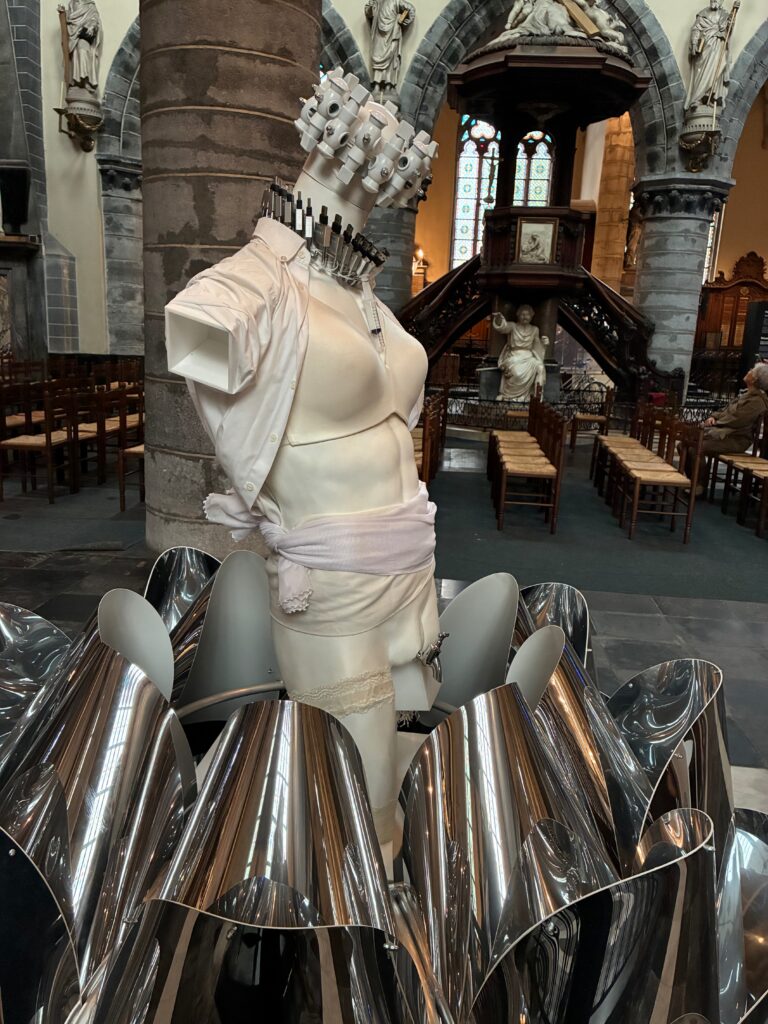
The programme included exhibitions at Charline Kervyn Contemporary Art Gallery and Third Place Art Gallery, as well as Drie kunstenaars, drie verhalen ( “Three artists, three tales”). at Sint-Jacobskerk. At Third Place, Dirk Santens exhibited alongside guest artists Li-Ma, Frederik Buyckx and Joos Habraken. The gallery’s model, combining the work of its resident artist with invited practitioners, offered an example of how smaller spaces can create opportunities for artistic exchange.
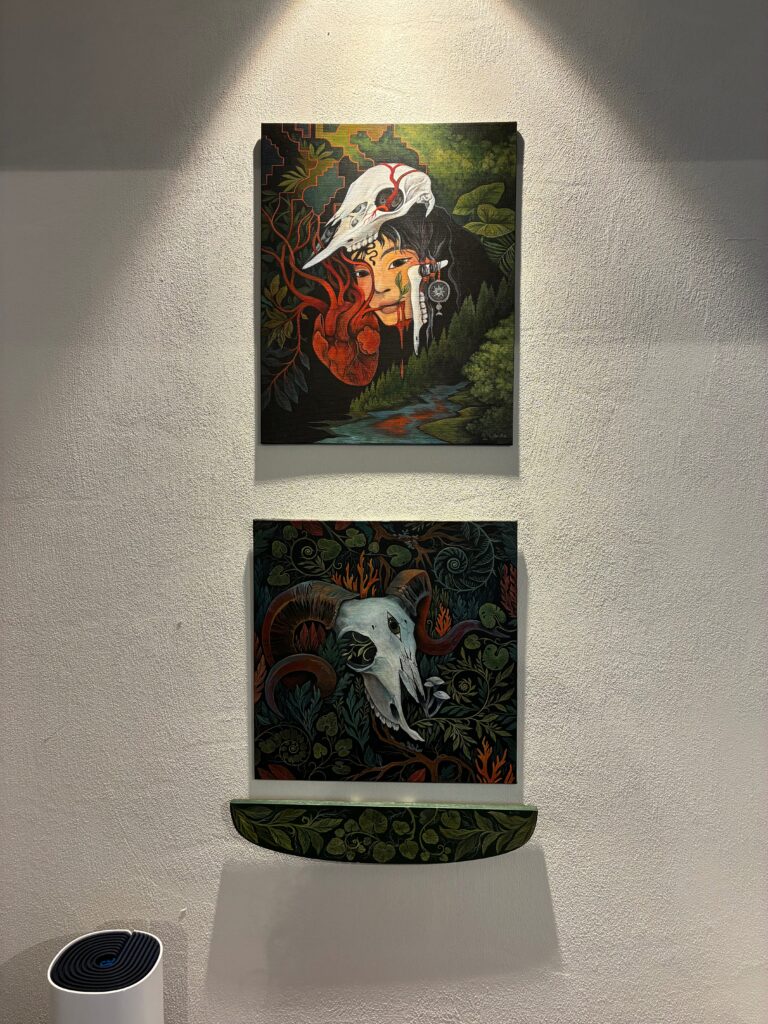
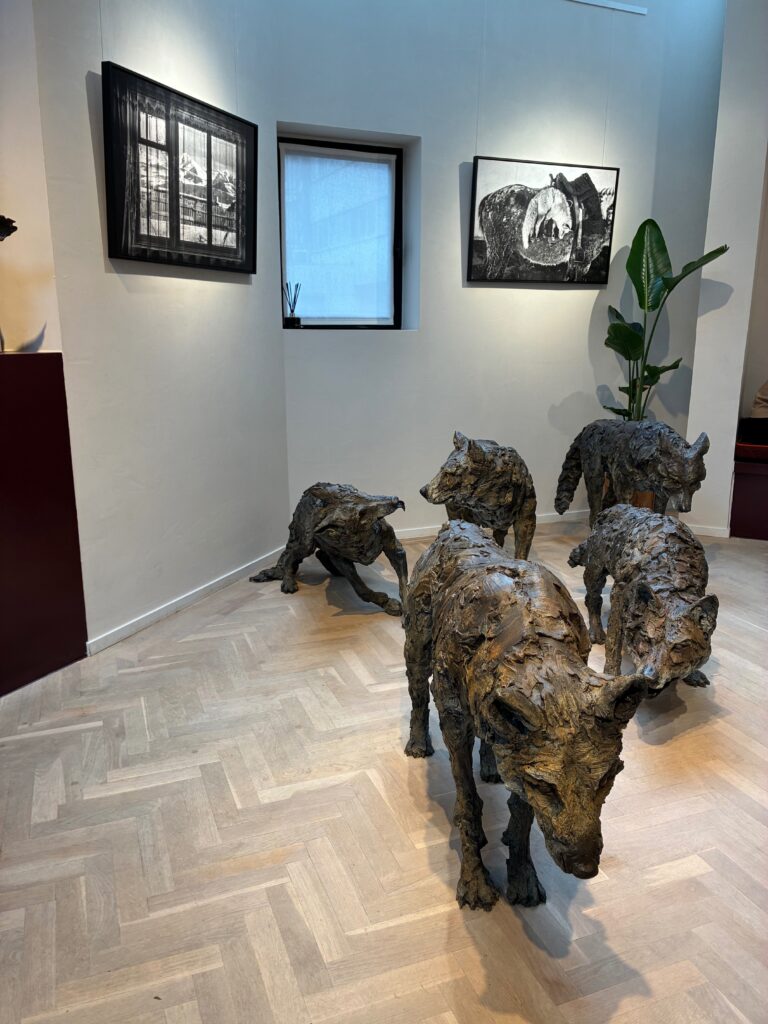
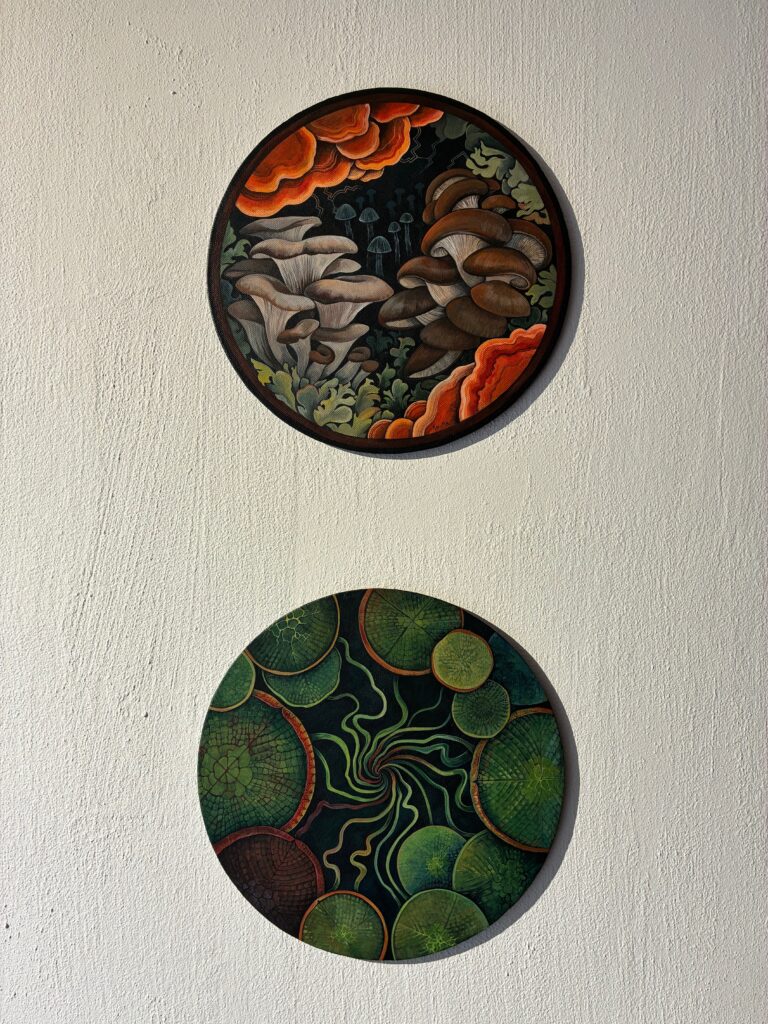
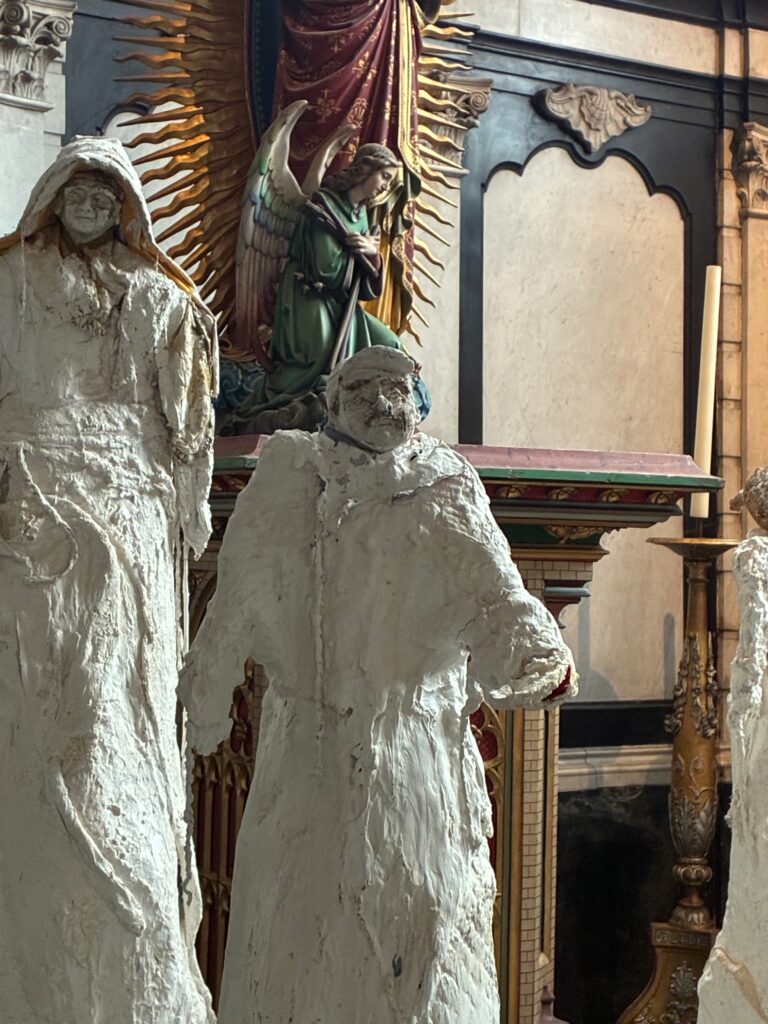
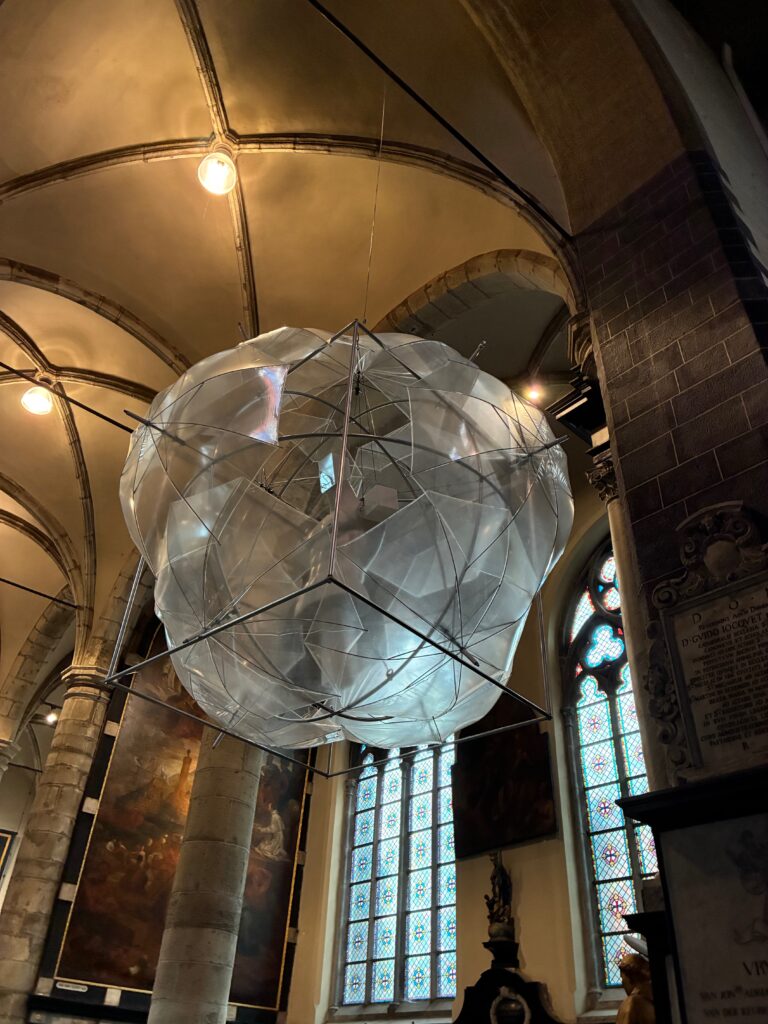
At Sint-Jacobskerk, the exhibition brought together Mark Swysen, Philip Bogaert and Els Aerts under the curatorship of Sophie Cocquyt. Installation art, photography and visual art entered into dialogue with a church that has carried religious imagery, symbolism and collective memory for centuries.
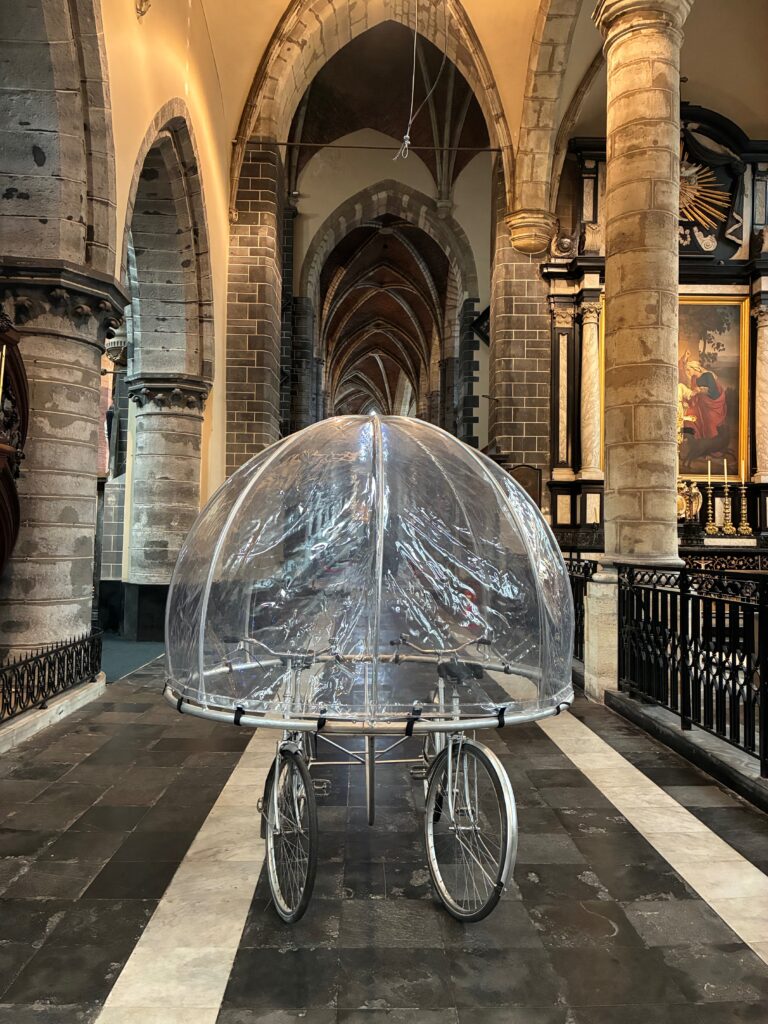
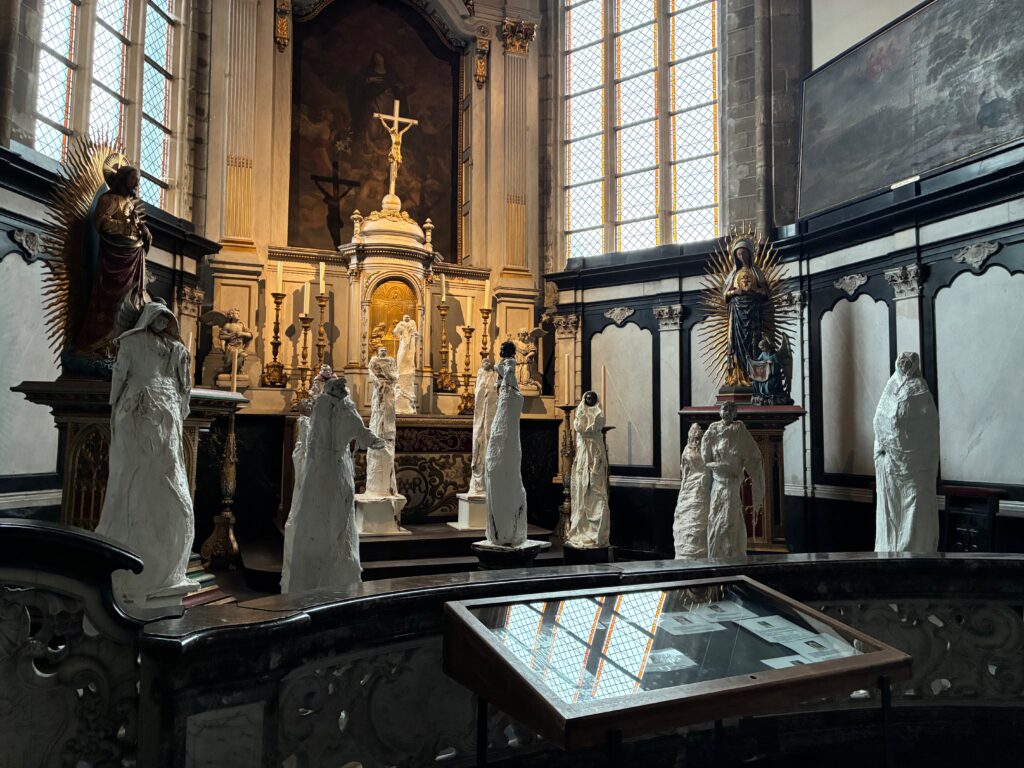
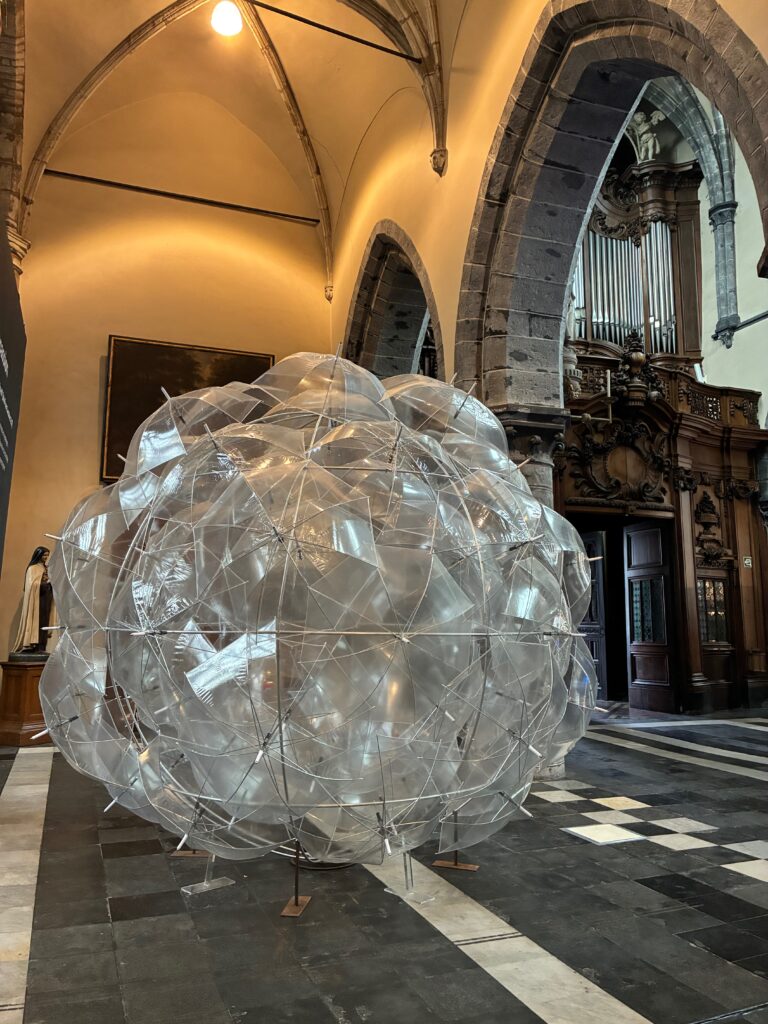
This was one of the most interesting architectural conditions in the programme. A historic building is never a neutral container. Its proportions, materials, light and accumulated associations influence how contemporary work is perceived, whether or not the artist has deliberately responded to them.
A sculpture that might appear ordinary in a white gallery can become more imposing beneath a vaulted ceiling. Conversely, the grandeur of a historic interior can overwhelm a work that needs a more intimate setting. The building’s own aesthetic authority can lend significance to almost anything placed inside it.
The challenge is to make this relationship productive rather than merely picturesque. Ideally, an exhibition changes how we perceive both the artwork and the building. When the setting does all the work, the architecture risks becoming more memorable than the art.
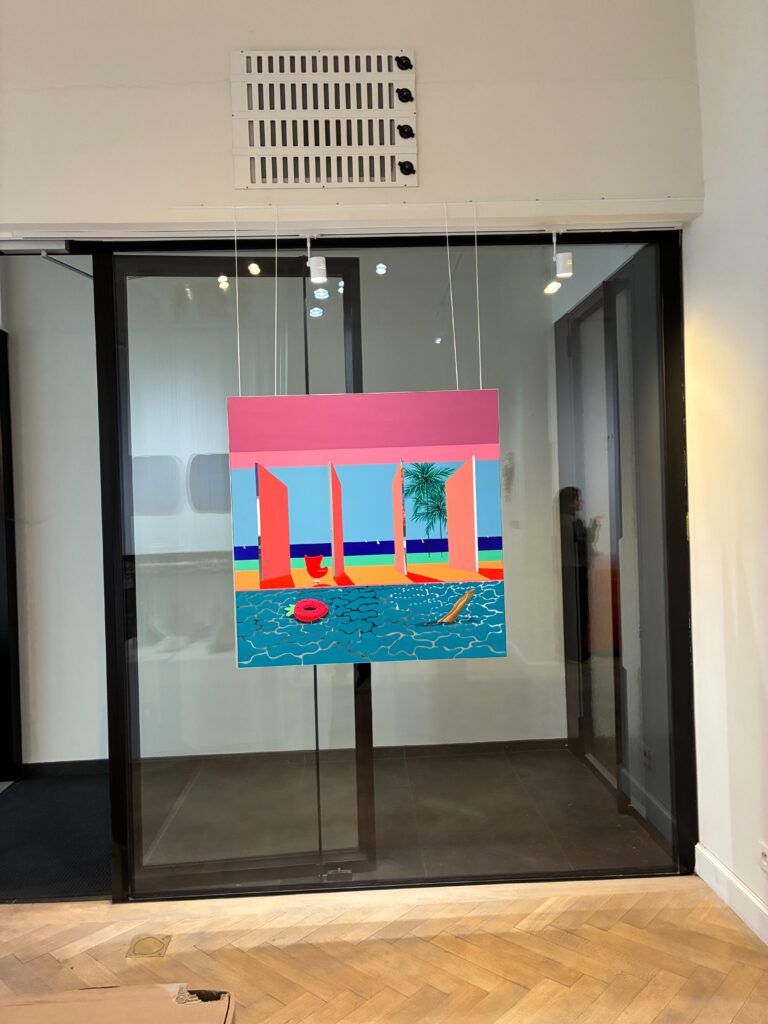
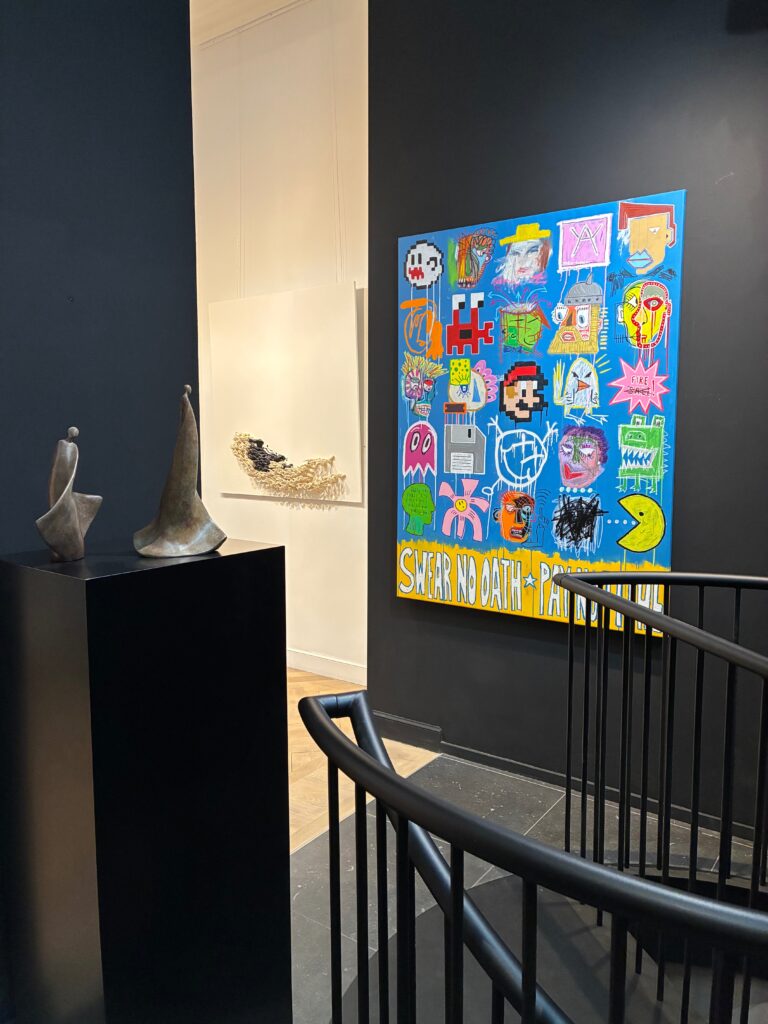
Three artists whose work caught my attention at Charline Kervyn Contemporary Art Gallery were Didier Engels, Louis Chapheau and Isabelle Derecque, whose approaches offer contrasting ways of engaging the viewer.
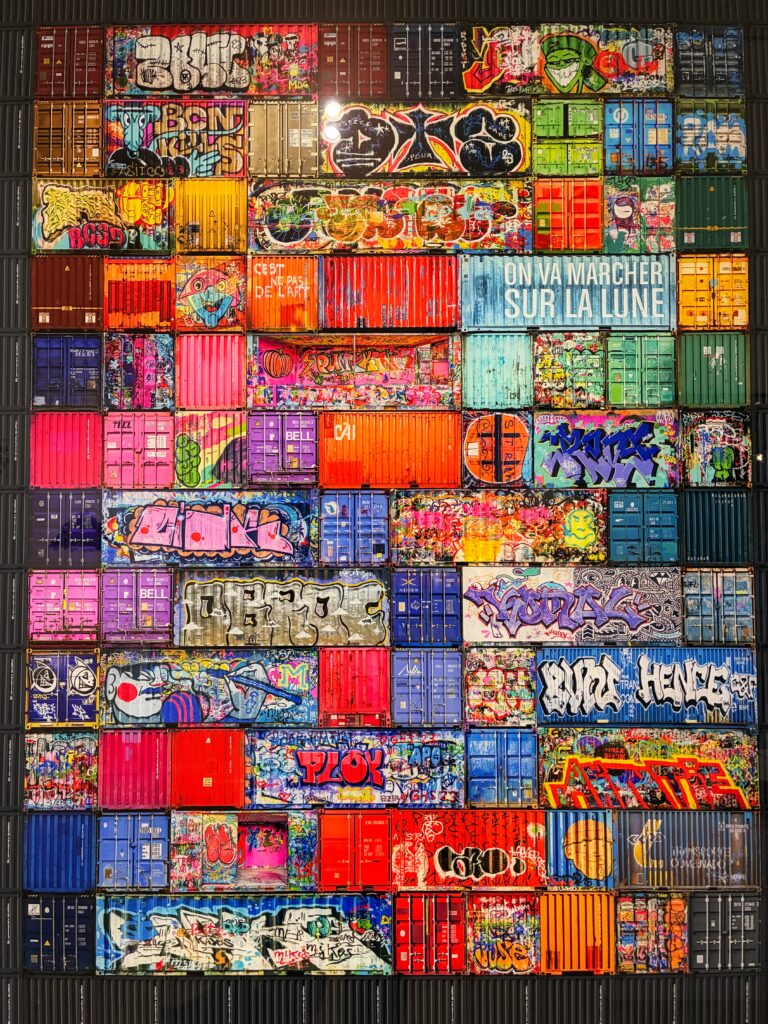
Didier Engels’ artistic photography transforms the industrial landscapes of ports into striking studies of colour, texture and geometry. Drawing on his background in textiles, he isolates the patterns, weathered surfaces and alignments of cargo ships and containers, blurring the line between documentary photography and abstraction.
Chapheau’s paintings are described as vivid, expressive and emotionally charged, using raw energy to challenge perspectives and provoke reflection. Derecque’s work, by contrast, draws viewers into colourful, sunlit worlds. Her use of mirrored Plexiglas makes light, reflection and the surrounding environment part of the experience, so the work changes depending on where the viewer stands.
What interested me was the way their works invite different kinds of engagement: one through intensity and productive discomfort, the other through colour, atmosphere and spatial interaction. From an architectural perspective, Derecque’s reflective surfaces are particularly intriguing because they blur the boundary between artwork, viewer and setting. The gallery becomes more than a neutral backdrop; it participates in how the work is experienced.
Between the familiar and the strange
At Velvet Room, FRICTION — Where Reality Begins to Shift brought together Pieter Walcarius, Maarten Caesens and Kathleen Ramboer. The exhibition explored the unstable boundary between what we think we see and what is actually there, using recognisable elements such as architecture, landscapes, light, space and nature as starting points.
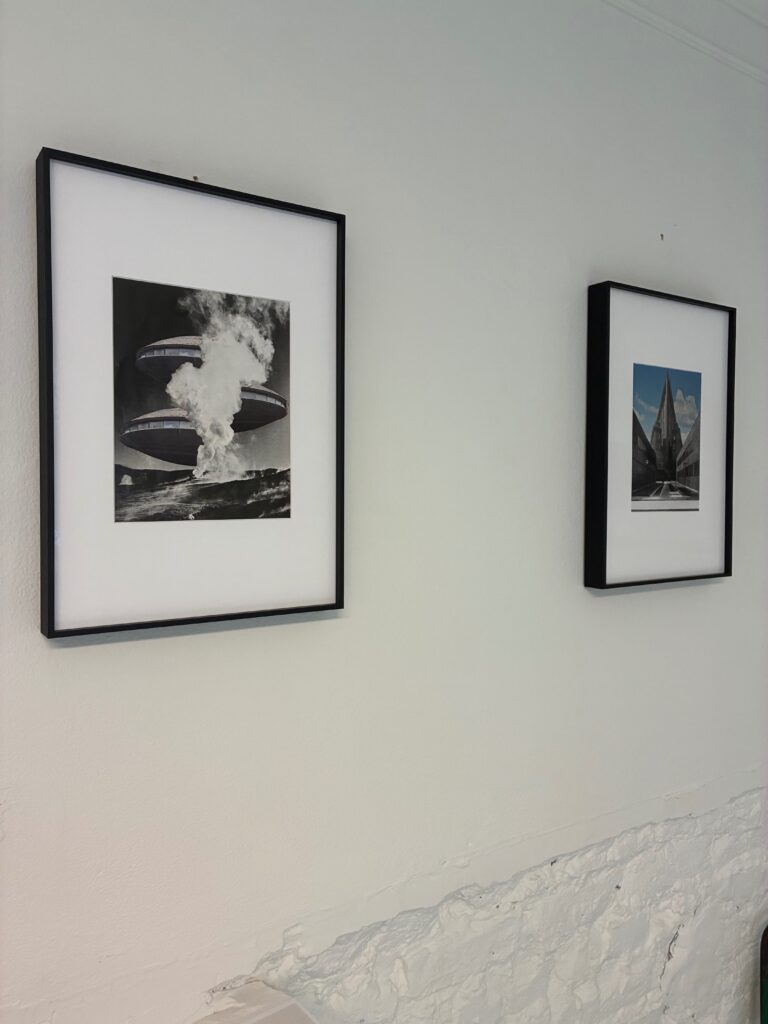
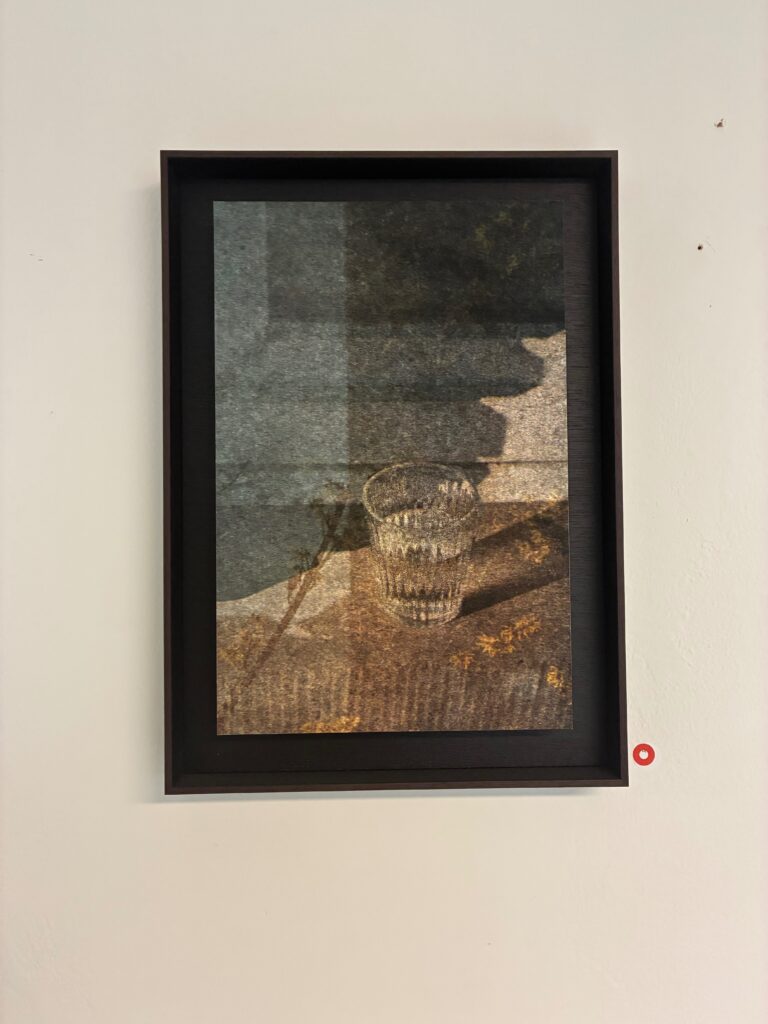
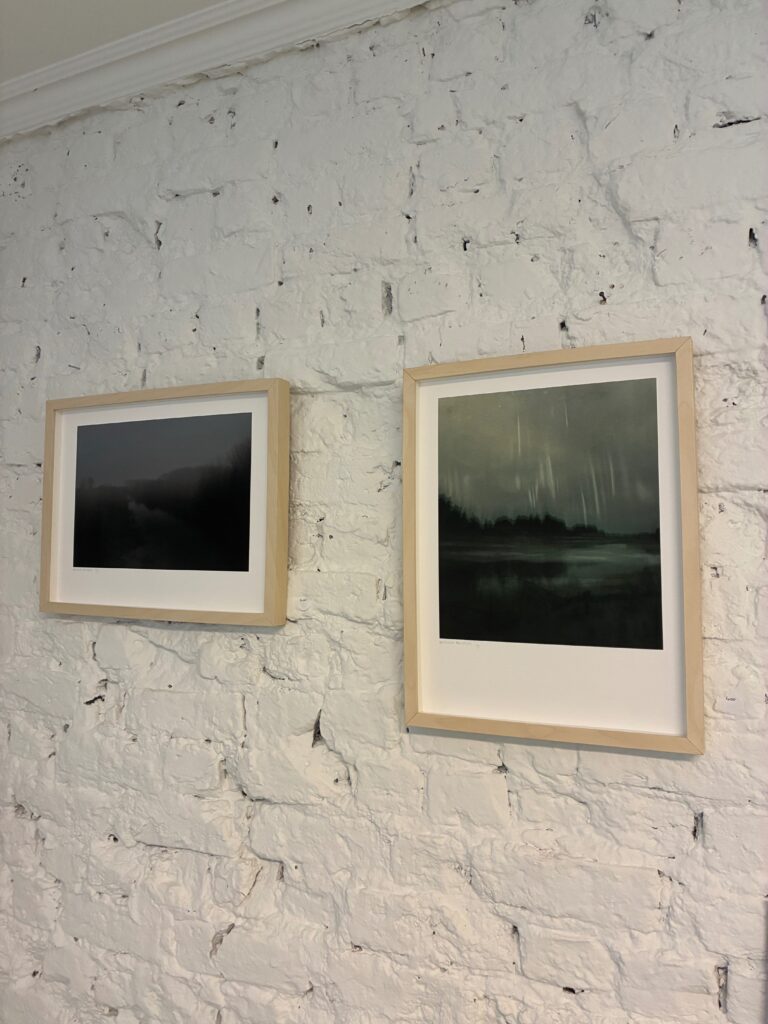
The premise resonated with several works that caught my attention during the week. I was drawn to pieces that transformed familiar forms through changes in scale, material, colour or presentation.
Some installations had a fragile, almost translucent quality. Others introduced organic shapes into architecture, creating contrasts between the irregularity of nature and the solidity of the built environment. Circular compositions, layered surfaces and sculptural arrangements encouraged a slower kind of looking.
These works were particularly effective when they left room for uncertainty. Rather than explaining what the viewer should see, they made perception itself part of the experience. A familiar shape could become strange; a recognisable space could feel unfamiliar.
This is one of contemporary art’s strengths. It can challenge our assumptions about ordinary objects and environments without providing a definitive answer. Architecture operates similarly: a space can feel intimate or oppressive, welcoming or alienating, depending on its proportions, context and the experiences we bring to it.
Yet ambiguity is not automatically meaningful. When an artwork leaves its interpretation entirely to the viewer, openness can feel liberating, but it can also leave the idea insufficiently developed. The most engaging works create a productive tension: they give us enough to hold on to while leaving something unresolved.
Velvet Room also hosted several other presentations during the week, including Curtiz’s Afterimages, Piero Toffano’s Instant Nude, Michael Lentz’s Work on Paper and Roel van Timmeren’s This Is Not a Lamp. These were distinct artistic propositions rather than parts of FRICTION, illustrating the venue’s wider interest in bringing different visual languages into one space.
Van Timmeren’s title, in particular, invites a familiar question about the relationship between representation and reality: when does an object stop being what it appears to be and become something else? It is a question that extends from conceptual art to the built environment, where function, appearance and meaning do not always align.
Colour, geometry and the power of the visual encounter
A different sensibility emerged in the paintings and mixed-media works I encountered, particularly abstract compositions built around saturated reds, oranges, blues and yellows.
Some works used geometric shapes and clear divisions of colour, while others relied on softer transitions, irregular edges or densely layered imagery. I was especially drawn to pieces where colour seemed to extend beyond the canvas, changing how the surrounding exhibition space was perceived.
At Tatjana Pieters, Ben Edmunds’s Second® offered an interesting example of the relationship between material and abstraction. Edmunds combines colour-field painting with adventure-sports equipment, applying fine mists of textile paint to create thoroughly saturated canvases. His approach connects the work to modernist colour-field painters such as Jules Olitski, Helen Frankenthaler and Kenneth Noland.
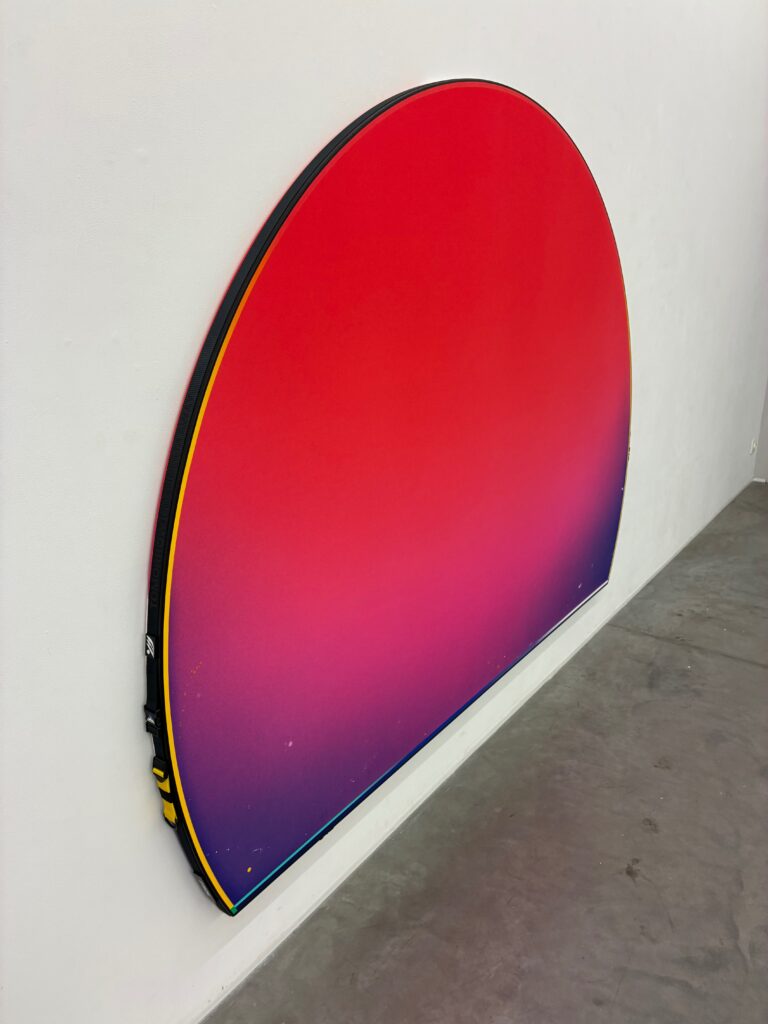
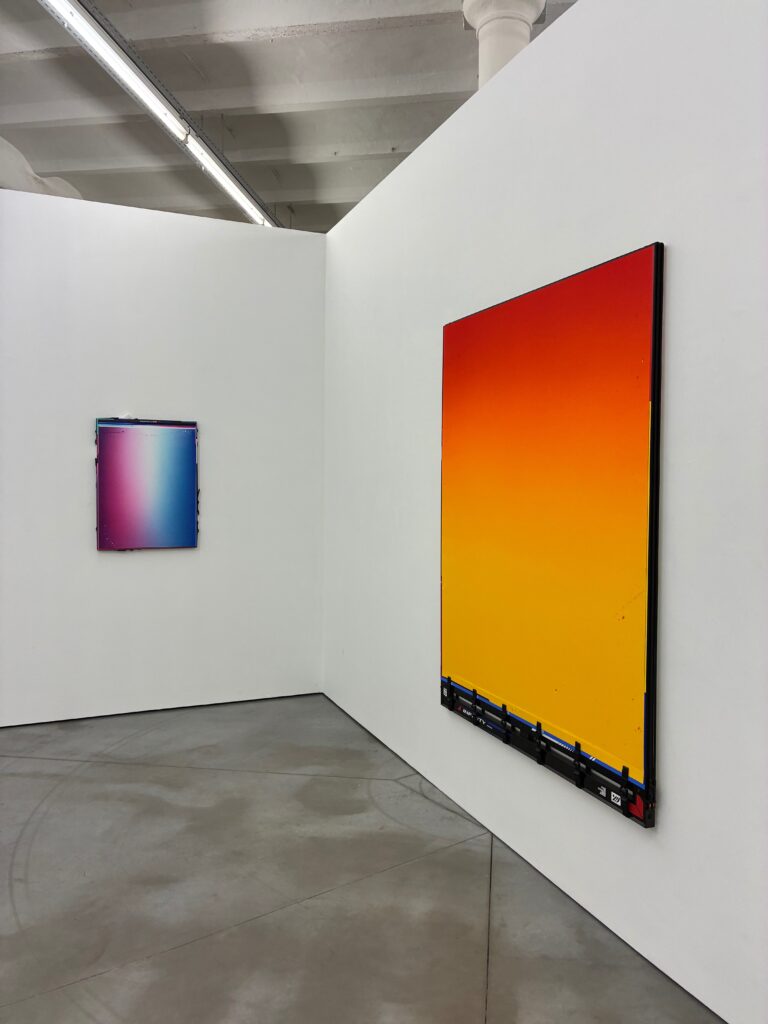
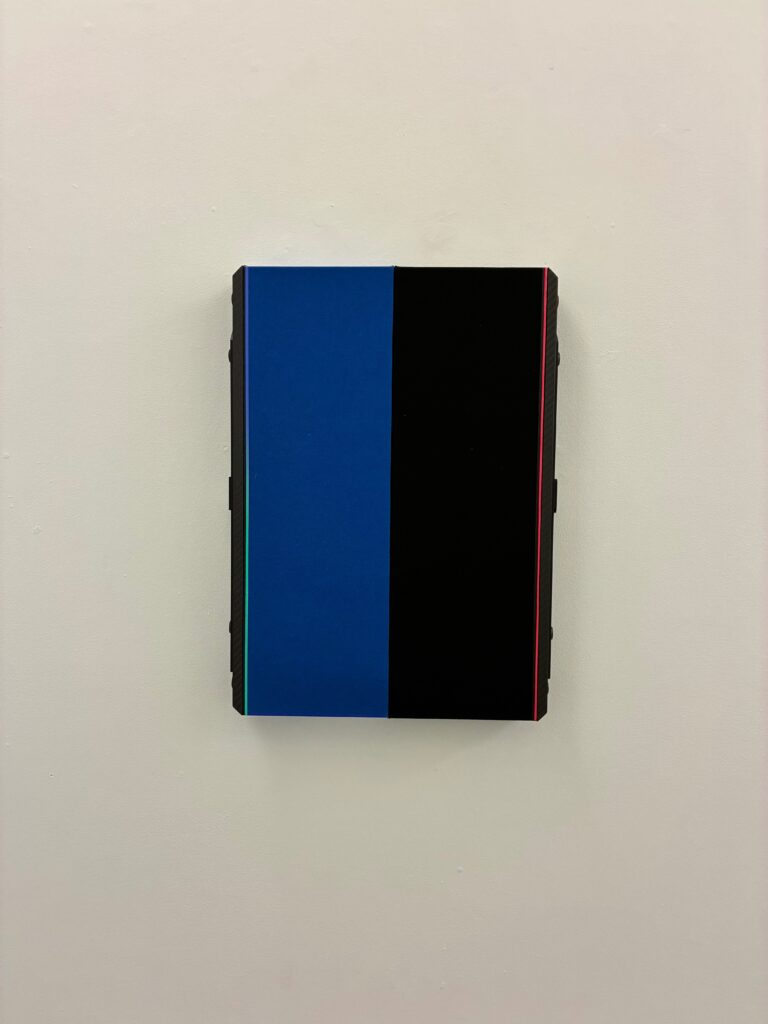
The material process matters here. Colour is not simply applied to a neutral surface; it interacts with the textile, creating a physical object as well as an optical experience. From a distance, the work registers as an arrangement of colour. Up close, its material qualities become more apparent.
In interior architecture, colour is inseparable from context. The same red can feel different in a confined room and a bright, open gallery. Its effect depends on illumination, surrounding surfaces and viewing distance. A painting can visually expand into its surroundings or compete with them, demanding attention so insistently that the room recedes from view.
Neither outcome is necessarily wrong. An artwork might deliberately dominate a space, while another might depend on subtlety and restraint. What matters is whether the visual language serves the work.
Bright colour can be immediate and pleasurable, yet it can also become a shortcut to attention. Minimalism can create space for contemplation, but it can equally feel underdeveloped. An appealing palette or fashionable formal language is not, by itself, a guarantee of depth.
The programme offered plenty of visual variety, although that variety made it difficult to judge everything by a single standard. Some works invited extended looking, while others made their strongest impression at first glance. Visual attraction and deeper engagement are not necessarily the same thing.
When the domestic becomes political
Brian Harte’s Tell the Village, also presented at Tatjana Pieters, approached contemporary uncertainty through a recognisable setting: the home.
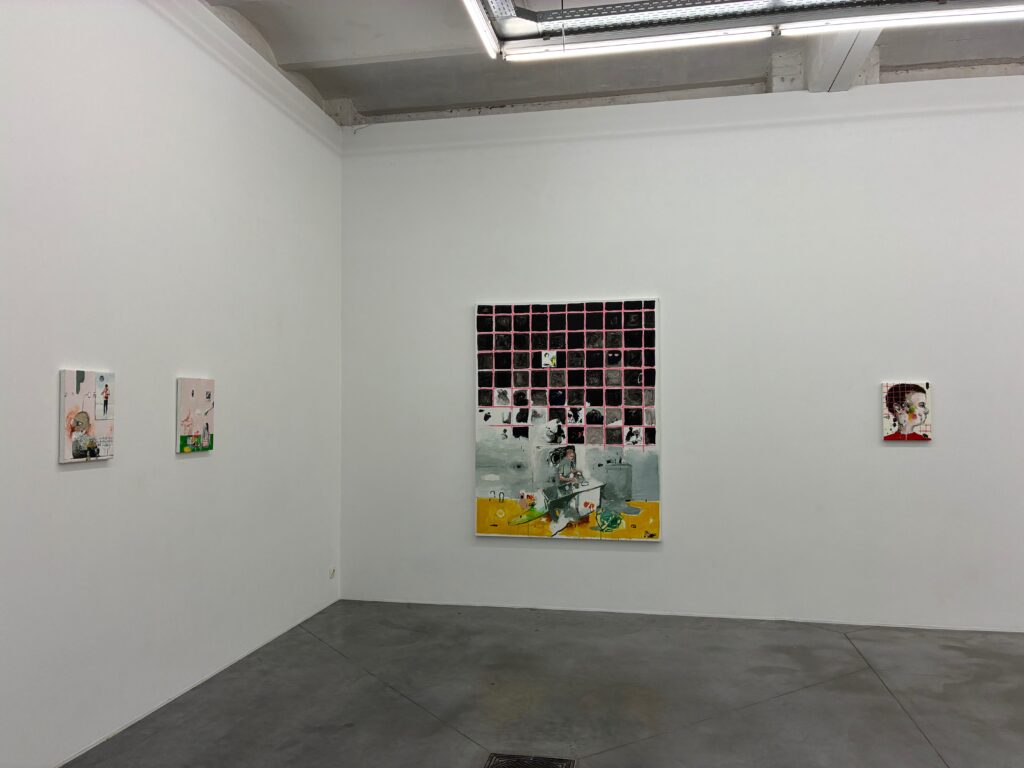
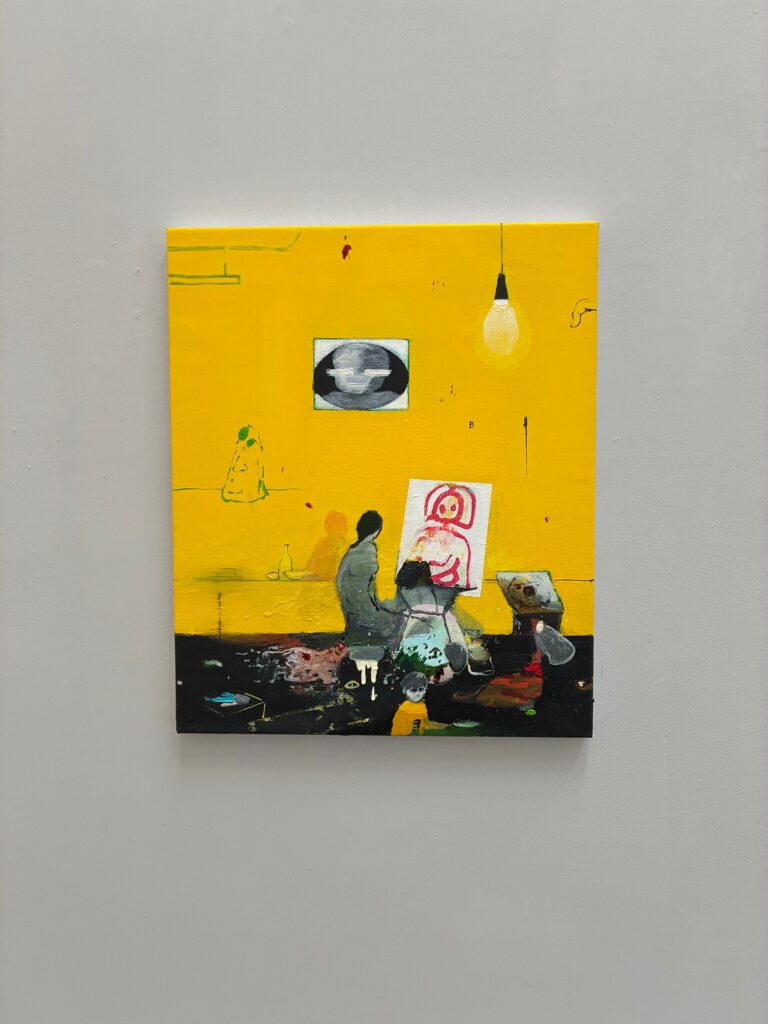
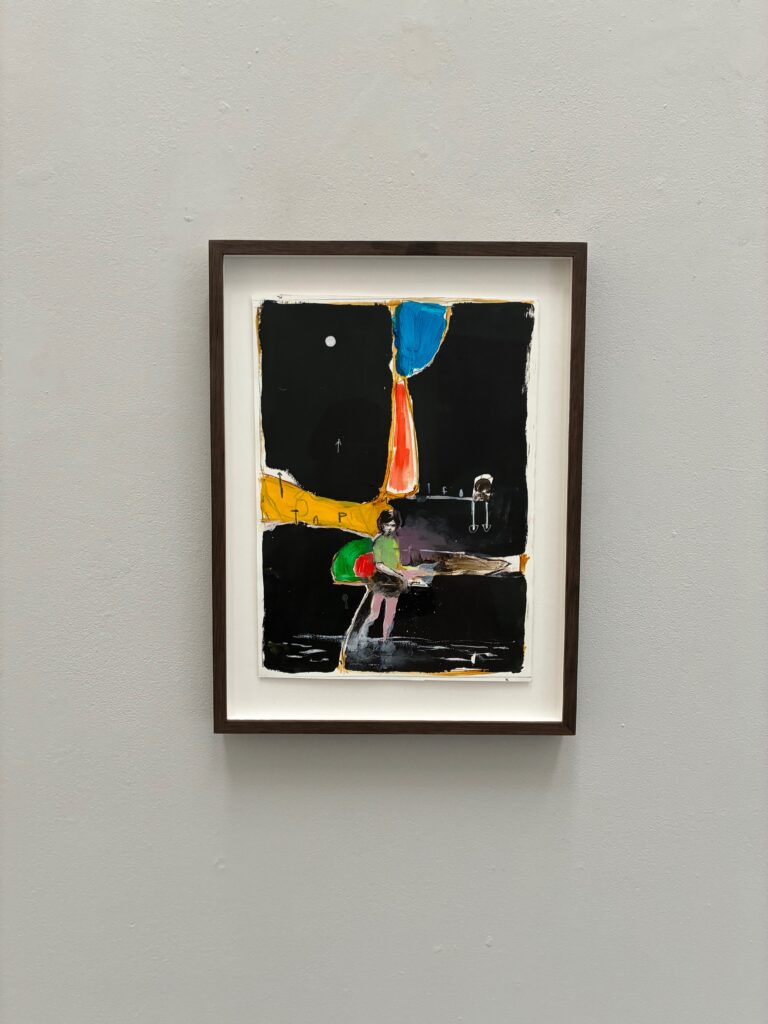
Harte describes his paintings as developing from domestic environments and the architecture of the family home. In the newer works, he introduces a more troubling dimension, treating the images as warnings about surveillance, political uncertainty and the hyper-attentive internet landscape.
The domestic setting is an effective lens for these subjects. Home is often imagined as a place of safety and privacy, separated from the pressures of public life. Yet digital surveillance, political instability and constant connectivity increasingly complicate that separation.
The home is more than a visual motif. Its rooms, windows and thresholds reflect ideas about privacy, security, belonging and control. By bringing political and technological concerns into familiar surroundings, Harte’s work suggests that large systems are not abstract problems happening somewhere else. They enter our homes, shape our routines and influence how safe we feel in spaces we consider our own.
This is one of the more promising approaches in the programme: using familiar environments to address complicated subjects without relying entirely on direct illustration.
It also raises a broader curatorial question. When an exhibition brings together works with very different intentions, how much context should be provided? An artist statement can help visitors recognise the questions behind a work, but the work itself must still carry some of that meaning. Context should deepen the encounter rather than substitute for it.
Between image and space
At Het Objectief, Slow Motion Scene II by Axel Gilain and Julia Emmery offered another perspective on the relationship between artistic disciplines. The exhibition, presented as an artist pop-up, accompanied the release of their latest vinyl record and a photobook drawing on images collected over the preceding years. Described as minimalist, abstract and poetic, the project brought photography into conversation with music and the sequencing of images.
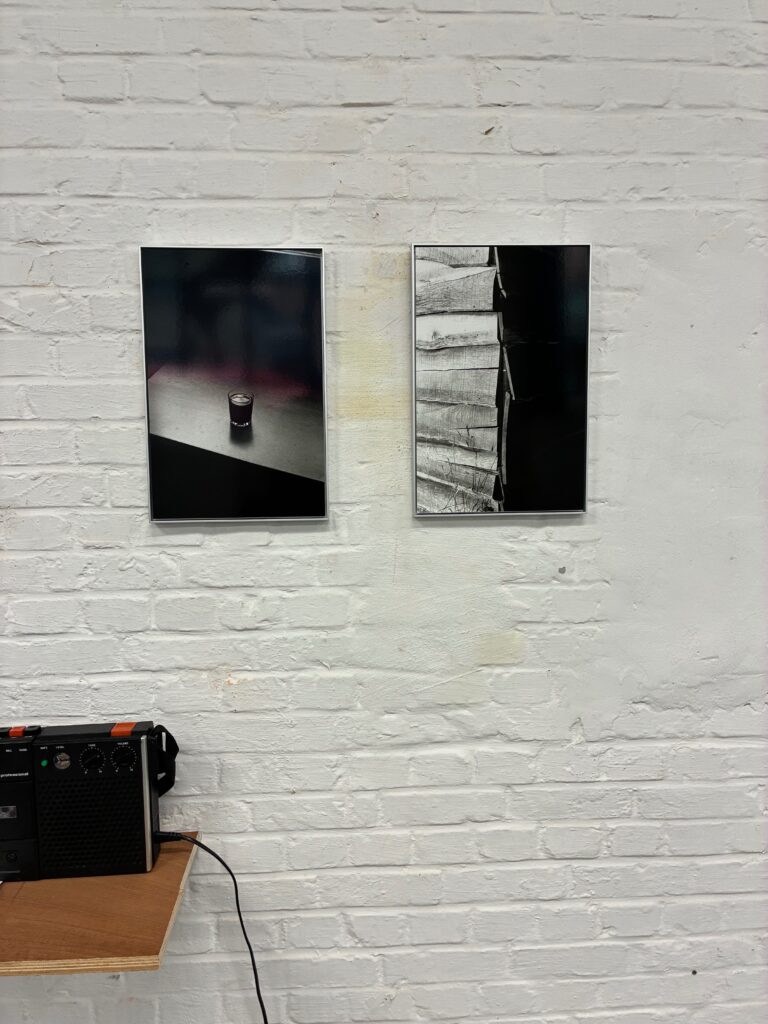
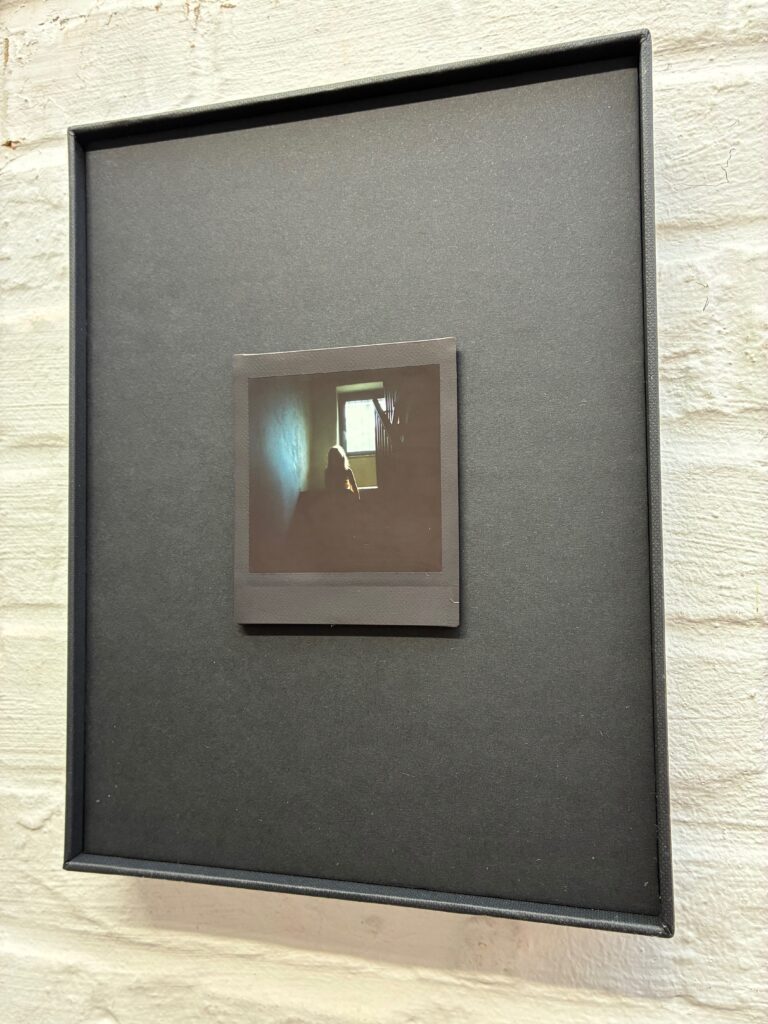
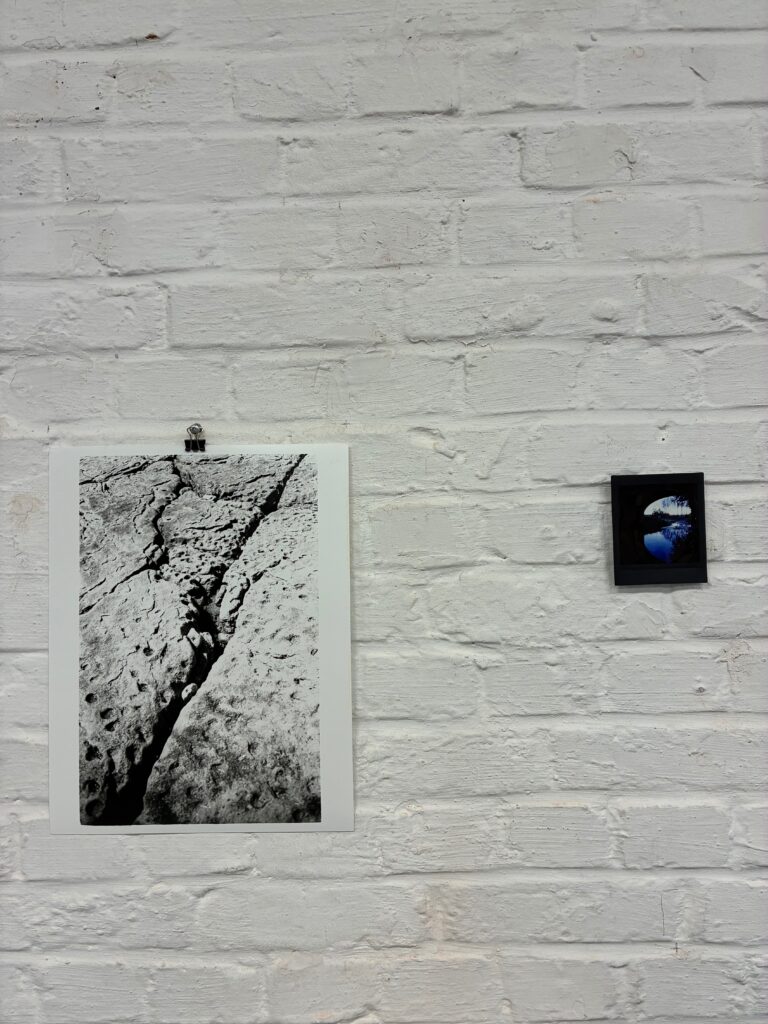
The combination interested me because both photography and architecture depend on how we frame and organise what we see. An individual photograph can be compelling, but its relationship with the images before and after it can change its meaning. Similarly, a room is experienced not as an isolated image but as part of a sequence of spaces.
This is also what makes a citywide art programme different from a conventional exhibition. The visitor creates a personal sequence by choosing where to go, what to spend time with and what to leave behind. The programme supplies the possibilities; the route becomes part of the experience.
Not every connection between venues will be intentional, and not every visit will produce a coherent narrative. But this freedom can be productive. Moving between different artistic approaches encourages comparison and allows unexpected relationships to emerge.
Dance: a different way of experiencing the city
The visual exhibitions were only part of my experience. I also attended Mélissa Guex‘s Down, a 25-minute dance performance presented at Campo @ Stadshal on Wednesday 30 September and Thursday 1 October.
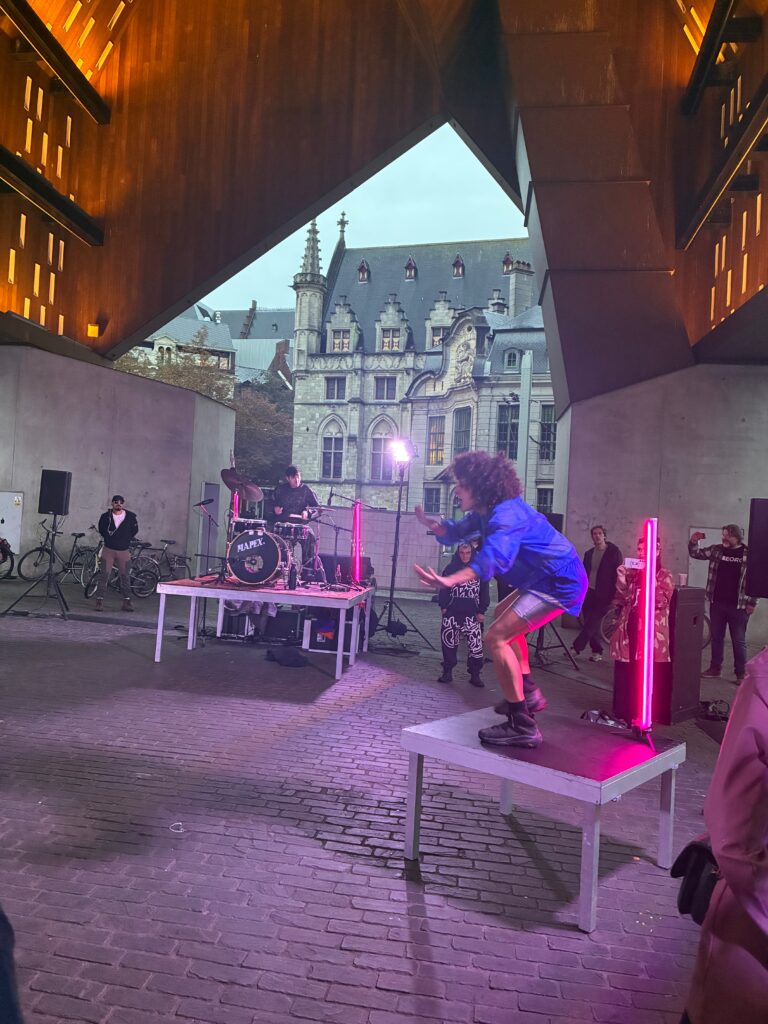
Dance changes the relationship between the audience, the body and the surrounding environment. Unlike a painting, which can be revisited at one’s own pace, a performance unfolds in time. Its gestures, rhythms and pauses cannot be separated from the moment in which they occur.
Architecture is often represented through plans, sections, elevations and photographs, but these representations can obscure an essential fact: buildings are experienced over time. We approach an entrance, cross a threshold, turn a corner and respond to changing views. Space is not simply something we see; it is something we move through.
Dance makes this bodily dimension explicit. A performer’s gestures, speed and balance can change how we perceive distance, weight and enclosure. A small movement can become significant in a large space, while a confined setting can intensify the presence of the body.
When performance takes place in a public setting, it can also interrupt the rhythms of everyday urban life. The audience may arrive unexpectedly, and the surrounding city remains visible as part of the event.
This kind of programming can make contemporary art feel less remote. It places artistic expression in an environment shared by residents, commuters and visitors, rather than requiring audiences to enter a specialised cultural institution.
There is a limitation, however. A short performance in a public setting may offer an exciting encounter without allowing much time for development. Whether that brevity is a weakness depends on the work’s intentions. A concentrated intervention can be effective precisely because it interrupts ordinary life, while a more complex piece may need greater duration or a more carefully controlled setting.
The value of the format lies in its capacity to make performance part of the city’s everyday experience, not simply in its novelty.
Two evenings of short films: a spectrum of reactions
The film screenings at Velvet Room provided another perspective on Ghent’s independent cultural programme. Ghent International Film Week describes itself as a modest, screening-focused festival that places contemporary cinema and video art in conversation with other art forms. Its format favoured intimate encounters over the spectacle associated with larger film festivals. Both screenings I attended were free and included a drink.
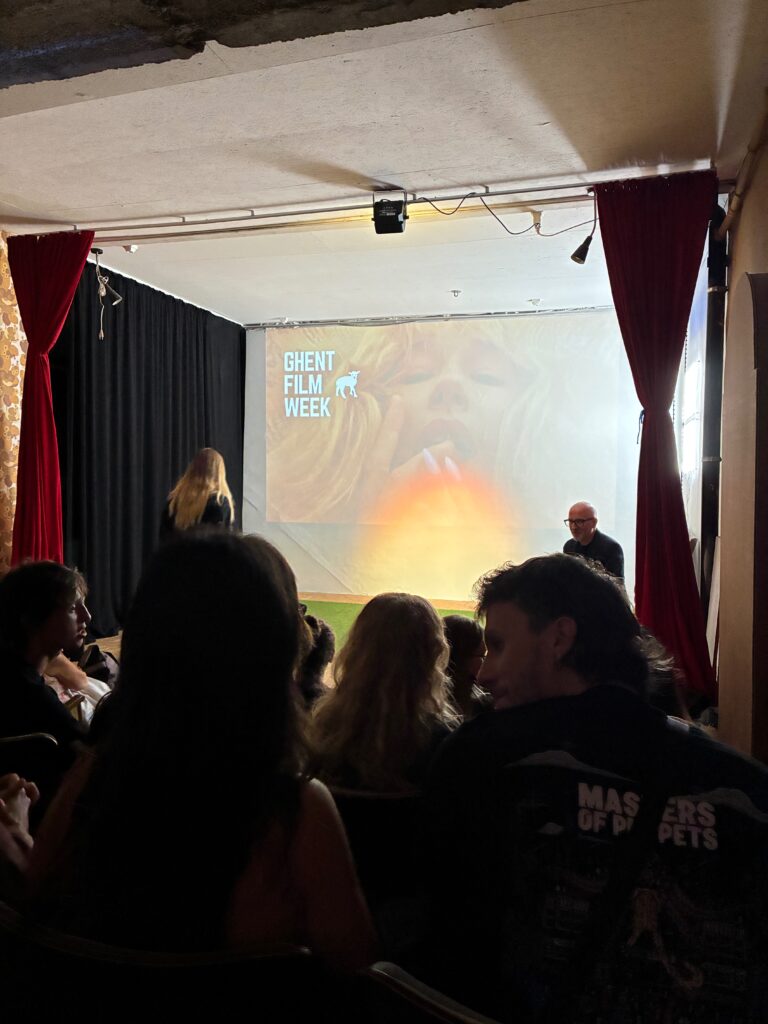
Across Friday’s Contemporary Shorts 2 and Saturday’s Contemporary Shorts 3, I encountered fifteen films spanning surrealism, animation, experimental imagery, intimate documentary approaches and narrative fiction.
The most memorable works were not necessarily the most technically elaborate. They were the ones that established a distinctive relationship with their subjects and gave me a reason to remain engaged.
Friday: Contemporary Shorts 2
Mali Chen’s Loser, from Taiwan, was one of my favourites. Its surreal premise follows a discarded inflatable doll that awakens in a rubbish bin and joins a cart carrying abandoned toys and lifeless objects through a decaying city. As the objects begin to sing together, the discarded acquire a strange, collective voice.
The premise has a playful absurdity, but it also opens up a darker reading of waste, neglect and urban life. Objects rejected by society acquire an unexpected form of agency. The film’s world is both ridiculous and melancholy, allowing its imagery to do more than simply communicate a message.
The decaying city is not merely a backdrop. It establishes the conditions in which the discarded objects exist, connecting their surroundings to questions of value and belonging. The film suggests how the environments we construct also reveal the systems through which we decide what deserves to be kept and what can be abandoned.
Mariam Bitsadze’s Under the Table, a Georgian, Romanian and Swiss production, was another interesting encounter. Set during an evening at an art residency in Cluj, it begins with young artists sharing tangerines and drinks before casual conversation gradually exposes political tensions and emotional undercurrents.
The premise is compelling because it locates conflict in an ordinary social situation. Conversations around a table can reveal the assumptions, loyalties and contradictions that polite interaction usually conceals. The shared room becomes a setting in which personal relationships and political differences can no longer remain entirely separate.
The film also invites a broader question about artistic communities: what happens when people who share a professional or cultural environment discover that they do not share the same politics or values?
Sofia Samoylova’s To My Grandfather, a German-Ukrainian production set in Ukraine’s Poltava region, was another highlight. The film follows a 92-year-old woman living with the loss of her husband. Made by her granddaughter, it functions as a farewell letter, exploring grief, love and the difficult continuation of everyday life after bereavement. It was extremely relatable since I lost both of my beloved grandfathers.
Its premise points towards a quieter understanding of cinema’s possibilities. A film can create meaning through intimacy, memory and the ordinary spaces people continue to inhabit after loss. The domestic interior becomes a record of a shared life, while the act of filming becomes a way of preserving a relationship.
Not every film achieved the same effect for me. Claire Marshall’s Frames, from Australia, explores the surveillance, scrutiny and fragmentation of women’s bodies in a post-feminist context. It was one of the films I enjoyed the least.
The subject is important, but its significance alone cannot guarantee a successful artistic experience. I found myself questioning how effectively the film’s formal choices communicated its ideas and whether its approach gave the subject enough complexity to move beyond its premise.
That response is necessarily subjective. A festival screening offers only one encounter with a work, and my reaction is not a definitive assessment of its artistic merit. Nevertheless, it illustrates a distinction I kept returning to throughout the week: an artwork’s intentions and its effects are not always the same. What an artist sets out to communicate matters, but so does what the work actually makes possible for its audience.
Varvara Zarytska’s How to Fall Out of Love, a Polish-Ukrainian production, left me unmoved. Its protagonist, Agata, revisits video archives and memories after a painful breakup, trying to understand why her relationship failed. The film’s central question—if memory is a creation, what is film?—is intriguing, even if the work did not establish a strong emotional connection for me.
I also struggled to recall Arseny Bezrukov’s Derailed, a Russian-British production described through physical attraction, collision, repulsion and movement without direction. Anne Zinn-Justin’s Bestiary, from France, left a more favourable impression. Its story of a mechanic raising her rebellious teenage daughter in an isolated house, as animal behaviour changes around them, offered an unsettling premise about family, survival and the natural world.
These varied reactions are part of what makes a multi-film programme useful. It creates room for comparison, disagreement and the discovery of personal preferences. The most successful screenings did not simply confirm what I already liked. They gave me something to think about after the lights came back on.
Saturday: Contemporary Shorts 3
Saturday’s programme offered another range of approaches to storytelling and experimentation.
Annamaria Pennazzi’s A Blink and A Whisper, from the United Kingdom, was a surreal exploration of the relationship between an eye and a mouth. Through close-up imagery, evocative sound and rhythmic gesture, the two body parts engage in a wordless dialogue shaped by desire, fear and vulnerability. I liked the film’s unusual premise and its ability to create an encounter through fragments rather than conventional narrative.
Laura Engelhardt’s Mascha, from Germany, follows a woman without a permanent home who lives in her car. When she loses it, she must search for somewhere safe to spend the night in the city. The premise brings a pressing social issue into focus through an immediate, practical problem: the loss of a vehicle becomes the loss of shelter.
The film also raises a question about the relationship between housing and security. A city may offer streets, buildings and public infrastructure, but these do not necessarily provide everyone with a place where they can safely exist. From an architectural perspective, the distinction between having a built environment and having access to a home is fundamental.
Tom Bessoir’s Equal, from the United States, was particularly relevant to my interests in architecture and spatial perception. The film examines Richard Serra’s sculpture of the same name at the Museum of Modern Art: eight forged-steel blocks arranged in four stacks, each weighing 40 tons. The sculpture’s repeated forms invite contemplation of space, mass, weight and time.
I found the premise interesting because it connects cinema to the physical experience of sculpture. The work asks viewers to consider how simple forms can produce an overwhelming sense of scale and weight while encouraging sustained attention. I could not recall the film clearly afterwards, but its subject stayed with me as an example of how different art forms can investigate the same spatial questions.
Miguel Bensadón Oliart’s The Locker Room, from Spain, follows a young football player facing tryouts in an atmosphere of sweat, violence and pressure to belong. As he attempts to gain acceptance from his teammates, he begins to question whether he wants to remain part of the group. The film approaches masculinity and group identity through a recognisable social environment, where the desire for acceptance comes into conflict with personal boundaries.
Other films explored loss, isolation and the limits of ordinary experience. Allison Fan and Fred Midgley’s Something Has to Give used the stark interior of an empty warehouse as the setting for bodies moving between tension and release. Jeffrey Hoyt’s Waiting for the End of the World offered a quieter portrait of small-town America and the fractures beneath everyday life.
Marisa Papen and Michael Chichi’s Womb Space, from Belgium, took a more overtly mythic and sensory approach, combining menstrual paintings, movement and imagery of the forest. Although the film did not particularly impress me, its visual language sought to connect the body with a larger natural and symbolic world.
Djimili Dimou’s A Carcass, from France, presented a darker premise. In a collapsed world, Penelope attempts to maintain an ordinary life before forming a disturbing bond with the corpse of one of her attackers. The film’s premise pushes loneliness and survival into uncomfortable territory, challenging the boundaries of what a viewer is willing to accept. It was masterful.
Across the two evenings, the films demonstrated how differently artists can approach a subject. Some relied on surreal imagery, others on intimate observation or recognisable social situations. Not all of them held my attention, but the range made it possible to compare artistic intentions with their effects.
A short film does not need an elaborate narrative to be memorable. Sometimes a single image, an unexpected gesture or a carefully observed situation is enough. What matters is whether the chosen form creates an experience that extends beyond the premise.
What Ghent Art Week gets right — and what it could do better
The strongest aspect of Ghent Art Week is its willingness to create connections across disciplines and locations. Painting, installation, photography, dance and short films become parts of a wider cultural experience rather than isolated categories. Free entry also lowers a practical barrier to participation, making it easier to visit an unfamiliar space without committing to a ticket or an entire evening.
The programme included large and small venues, from historic churches to independent galleries and artist-led spaces. Playgrounds III, presented by Kunst in Huis at Zebrastraat, brought together more than a hundred emerging and established artists in a shared artistic environment. Meanwhile, smaller presentations such as Slow Motion Scene II at Het Objectief offered more focused encounters between photography, music and publishing.
This variety reflects a broader strength in Ghent’s cultural infrastructure: art can be encountered in different settings, at different scales and through different levels of institutional formality.
Yet an open programme also presents challenges.
When exhibitions are spread across many venues, visitors need clear information to understand what they are seeing, why a particular work has been selected and how it relates to the wider programme. The freedom to explore is valuable, but the experience can become fragmented if the connections between events are left entirely to the visitor.
There is also a tension between quantity and depth. A programme with dozens of artists and screenings offers many opportunities for discovery, but a large number of events does not automatically translate into a coherent artistic argument. Nor should every work be expected to appeal to every visitor.
For future editions, I would welcome more opportunities to encounter artists’ processes directly: short conversations, studio insights or discussions following screenings. These need not make the event more formal. They could give visitors a better understanding of the decisions behind the work and encourage conversations that continue after leaving the venue.
Equally, I would not want the programme to lose its informal character. The freedom to walk into an unfamiliar space, encounter an unexpected work and decide for yourself what you think is part of its appeal.
The art of leaving something behind
My experience of Ghent Art Week was uneven, as any encounter with a broad programme of contemporary art is likely to be. Some works caught my attention immediately; others became more interesting through their material choices or conceptual framing. Several films stayed with me, while others faded from memory almost as soon as the screenings ended.
The works I found most engaging made familiar things appear strange, connected intimate experiences to larger systems, or used material and form to create questions that remained open after the encounter had ended.
Coming from architecture, I am particularly interested in how these effects emerge from the relationship between an artwork and its context. But this perspective does not offer a universal measure of artistic quality. A historic building can enrich an exhibition while overshadowing the work it contains; an intense palette can attract attention without sustaining it; a quiet film can reveal something profound through an ordinary room.
What matters is not whether a work is visually impressive, intellectually demanding or emotionally moving in isolation. It is whether its choices produce an experience that feels worth pursuing.
Ghent Art Week’s citywide format makes room for these encounters. Moving between galleries, historic buildings, performances and film screenings exposes visitors to different ways of seeing, each shaped by its own artistic and spatial conditions. The freedom to explore is valuable, even when the connections between individual events are left for visitors to establish themselves.
Not every artwork needs to transform our understanding of the world. Sometimes pleasure, surprise or an unexpected visual encounter is enough. But when a work continues to generate questions after we have left the room, it has achieved something beyond immediate attraction.
What stayed with me was not a single definition of contemporary art, but a renewed interest in how art directs our attention and changes our relationship with what surrounds us.
Sometimes art catches our eye. Occasionally, it changes the way we look at everything around it.